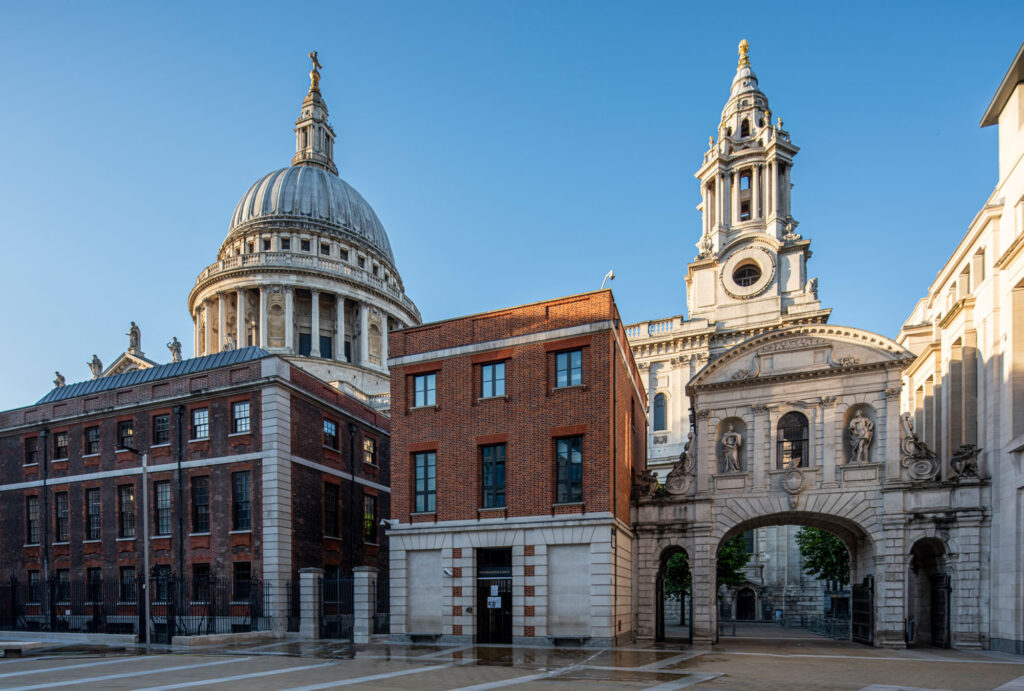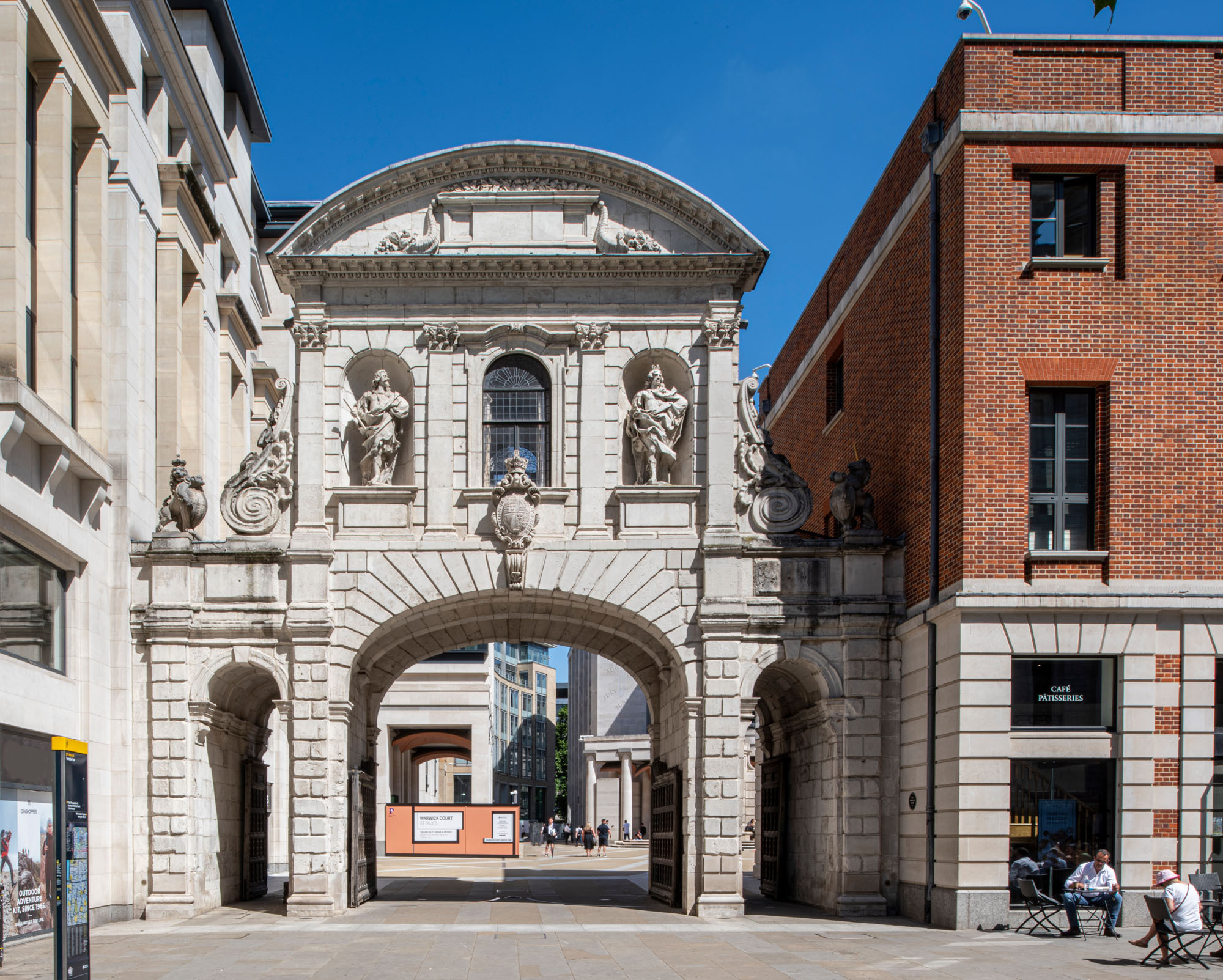
See the magnificent Temple Bar - the only surviving gateway to the City of London, from the original ten.
This imposing Portland stone arch was designed by Sir Christopher Wren and completed in 1672, at the request of Charles II. It originally stood where Fleet Street now meets the Strand. The new arch included niches on either flank of the opening filled with statues of Queen Elizabeth and James I on the Westminster side and Charles I and II on the City side.
It's original location was considered one of the main points to enter the City, and it also gave access to that part of London known as Temple, where most legal offices are still situated and from which it gets its name. The original Bar - or gate - in the 13th century, was probably no more than a simple chain across the road, later replaced by a timber gatehouse also including a prison.
In the late 19th century, the Bar was removed to allow easier traffic flow and to make room for the new Royal Courts of Justice. It was taken down, stone by stone, each stone was numbered, and re-erected at Theobalds Park in Hertfordshire. In 1984 the Temple Bar Trust became owner of Temple Bar and permission was granted for the removal of the Bar from Theobalds Park. The reconstruction and restoration was completed in 2004 placing Temple Bar back in the City, in Paternoster Square, near to St Paul's Cathedral. Temple Bar has featured in many ceremonies and processions throughout the years. It is now the Livery Hall of The Architects' Company.
The Wren Room and Temple Bar Chamber within Temple Bar offer two elegant spaces to hire for private dining/receptions, meetings or talks. Find out more about how to hire these spaces.