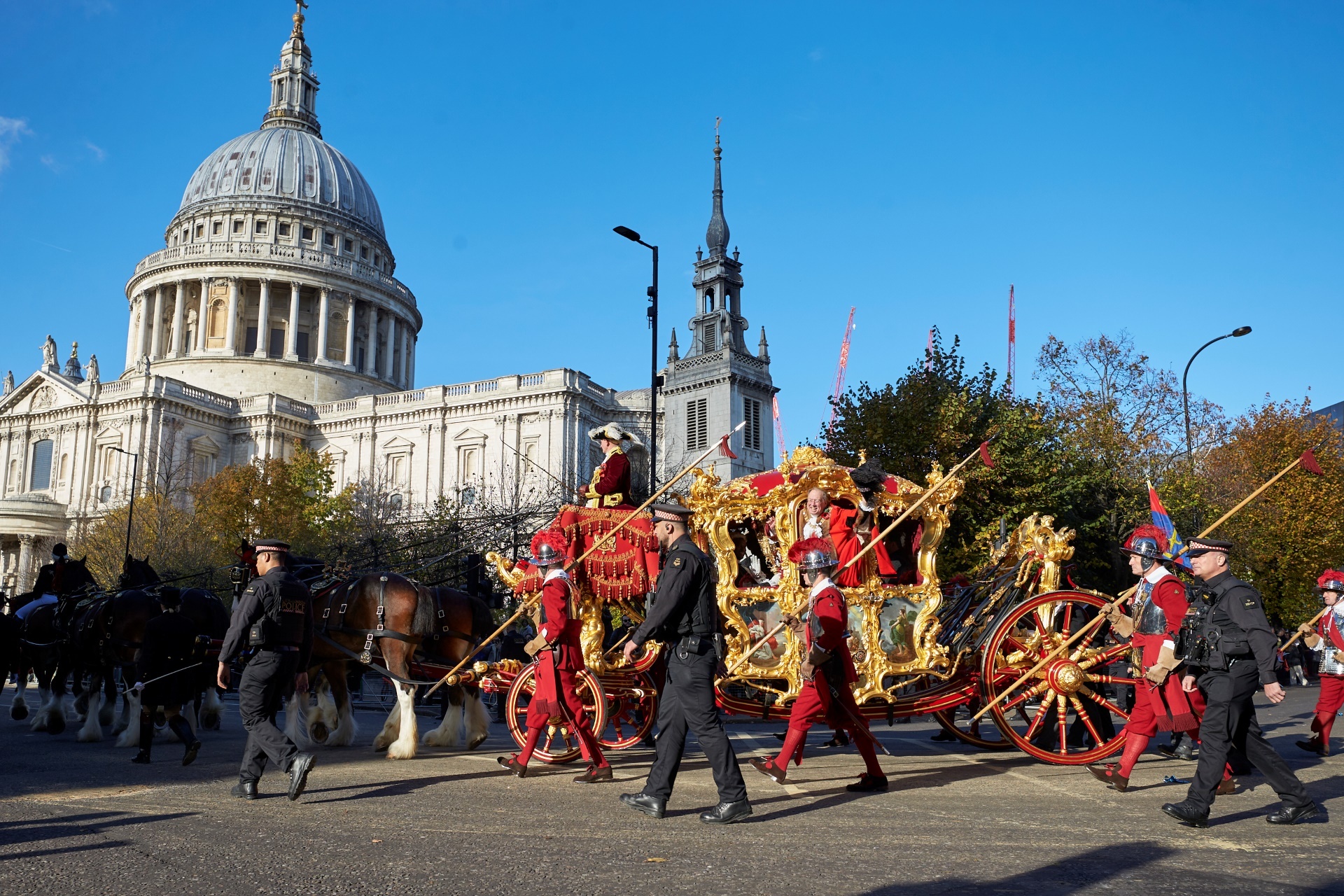
One of the oldest civic celebrations in the world
From Dick Whittington to the Magna Carta, the Lord Mayor's Show touches upon huge swathes of English history across over 800 years.
The show has survived plague, fire, bombing, riots and more, having moved from river to road; the Lord Mayor's Show represents more than just the swearing in of a new public official; it's a testament to British history, tradition, pageantry and passion.
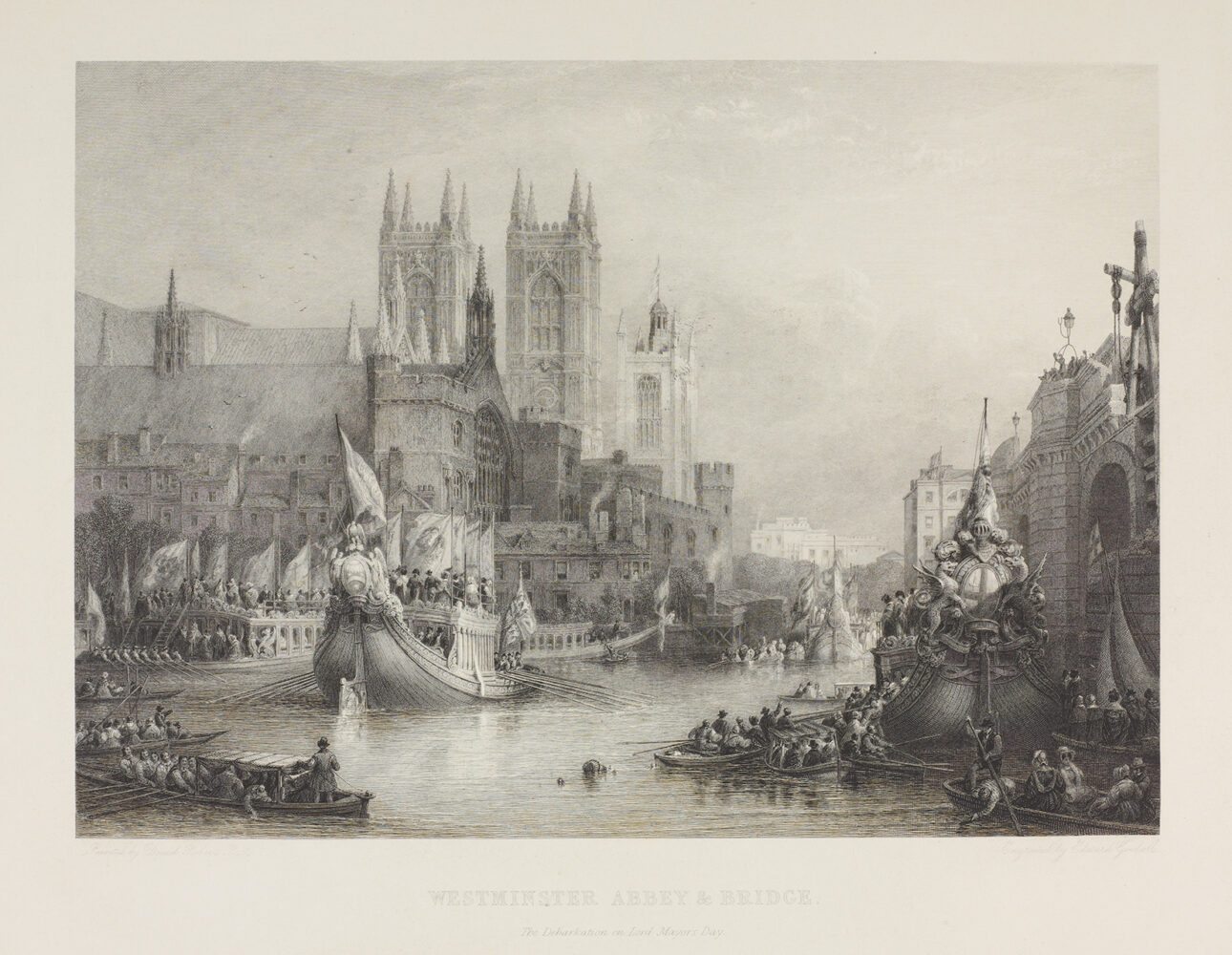
The Lord Mayor's Show 1836 The London Archives (c)
Its founding
The role of the Lord Mayor of the City of London is an ancient tradition, and one of the oldest offices in the world still kept. It dates back to 1215 and was created by King John in a bid to keep the City on his side, while also getting some money for his royal conquests.
In the 1200's, London was a rich place, mercantile in fashion, but not necessarily fortified, and thus open to attack. During this period, the City was attempting to obtain a pseudo-city-state status, and thus the Royal Charter was issued in 1215 declaring the City to choose its own Mayor yearly, instead of one appointed by the King.
The condition on this office was that the elected Mayor would have to leave the confines of the City (imagine the horror) and make their way to Westminster to swear allegiance to the King. When, later in 1215 the Magna Carta was signed, limiting the powers of the King, the Second Mayor of London was one of the signatories and added part 13, ensuring the liberties of the City of London aside from the rest of the country.
The office became called the 'Lord Mayor of London' around 200 years later, and the journey of the Lord Mayor to pledge allegiance to the King became a public spectacle so popular it was known as 'The Lord Mayor's Show'.
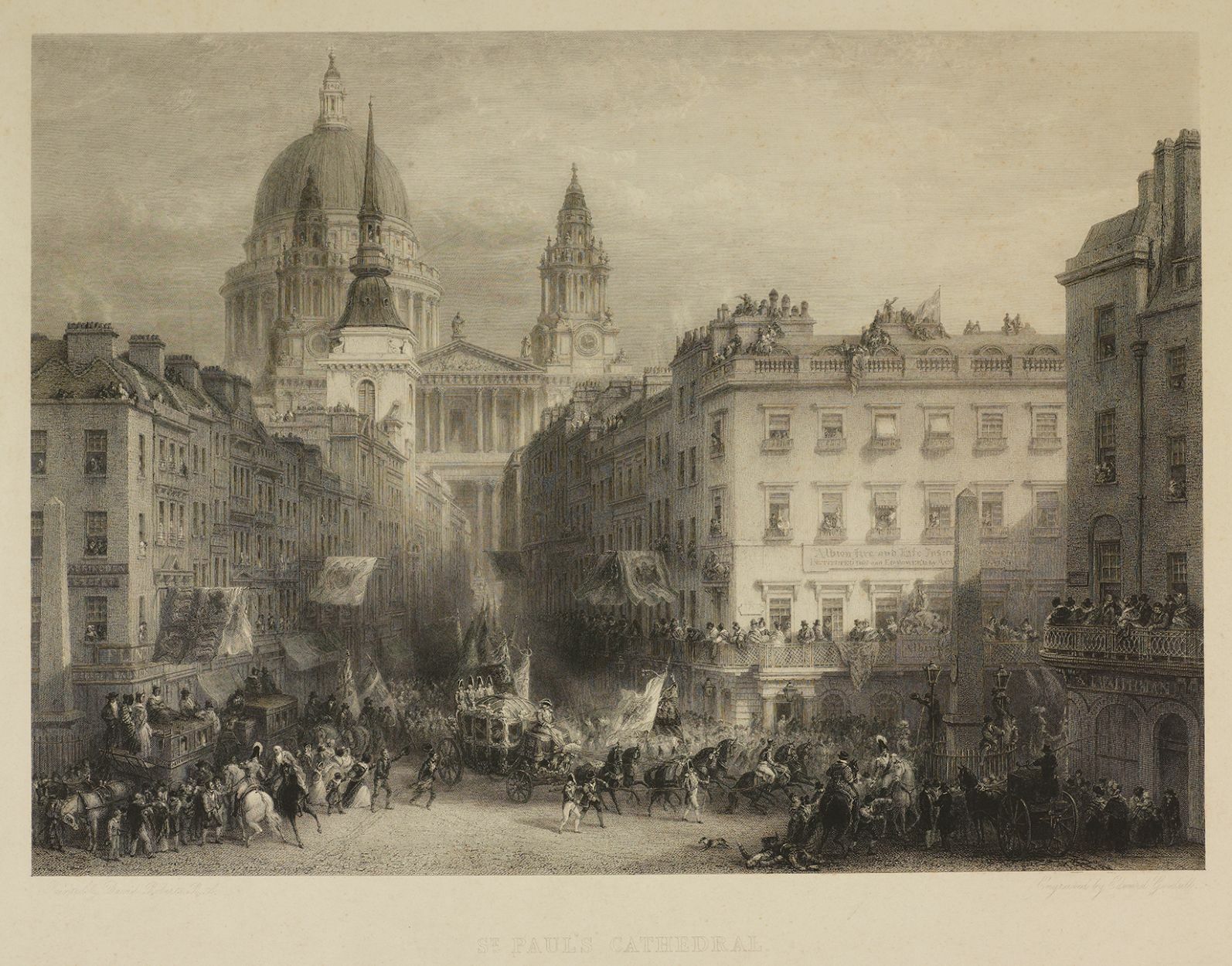
The Lord Mayor's Show 1844 (c) The London Archives
A Notable Show
The Lord Mayor's Show has been immortalised in countless pieces of art, and was one of the first ever publicly broadcast events by the BBC, with coverage continuing to this day. The show is one of the oldest civic traditions across the world and is attended by hundreds of thousands of people each year on the second Saturday of November.
The show has changed throughout the period, starting with the procession floating up the Thames, all the way to the now 250-year-old State Coach taking the Mayor to the Courts of Justice. During WWI the show became an opportunity for recruitment, while in WW2 the State Coach took a few years off and the pageantry was reduced to a military parade to accompany the Mayor through the Blitz to swear their allegiance to the King.
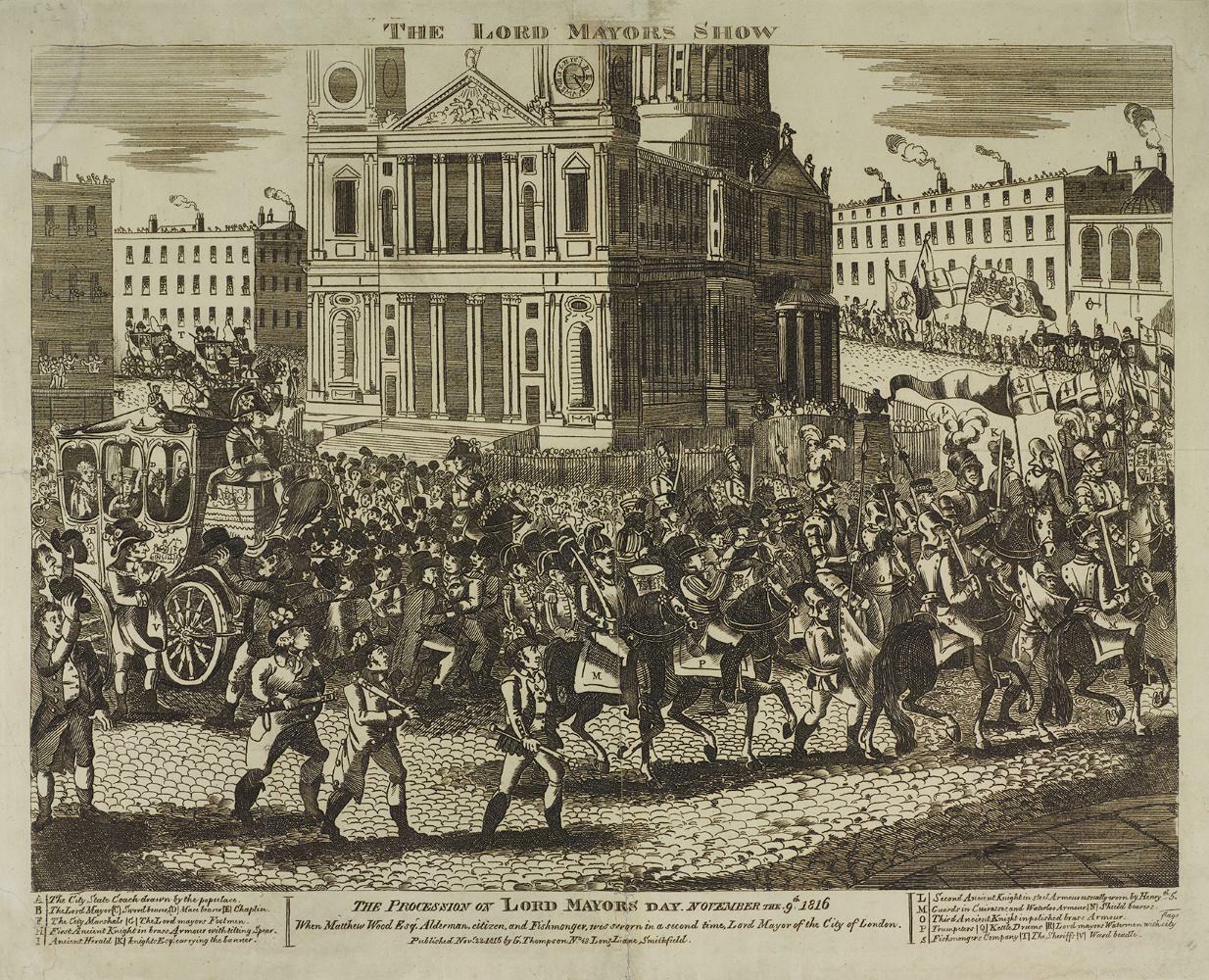
The Lord Mayor's Show 1816 (c) The London Archives
In 2020, the Coronavirus pandemic put a stop to the show for the first time since 1852, while in 1952 the route was finally fixed as it was deemed there were too many building works and construction sites to change the route yearly.
One of the most notable Lord Mayor's Shows is that of Dick Whittington, who was Lord Mayor three times. The related pantomime stems from the real-life Richard Whittington, who is possibly the most famous of Medieval Lord Mayors. It's thought that no one else served in this role three times, meaning that Whittington is not only famous in pantomime, but also for his service to the office which still stands today.
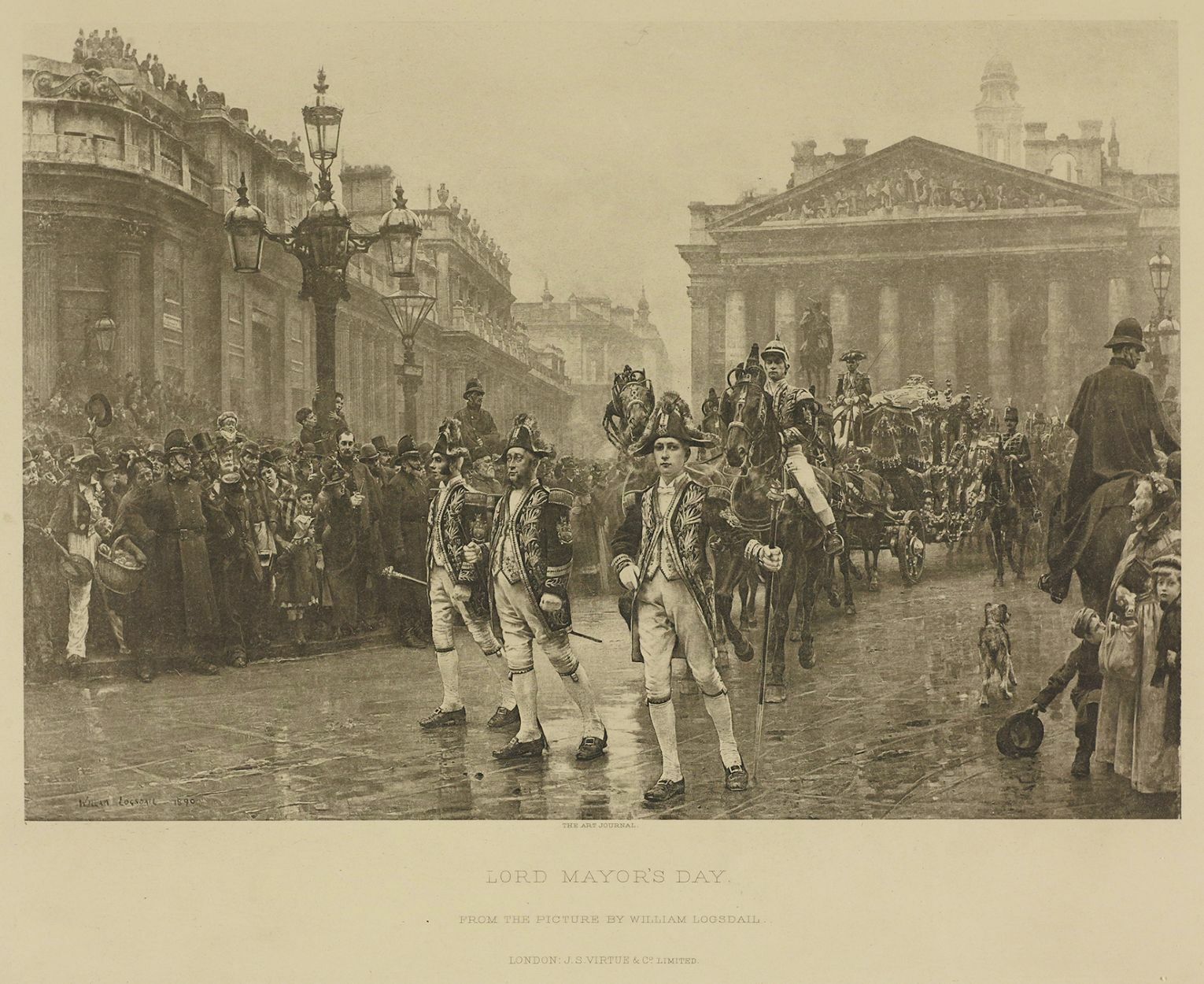
The Lord Mayor's Show 1892 (c) The London Archives.
Fun Facts
- The show has been featured in Shakespeare's plays, the diaries of Pepys, and the adventures of James Bond, among others.
- The Lord Mayor's Show used to take place on the river, with a large parade heading upriver towards Westminster. The parade would thus be full of floating participants on their boats, from which the term 'floats' we now use in relation to parades came.
- The parade route used to change yearly to ensure it went through the relevant Ward to which the Lord Mayor was elected.
- The state coach in which the Lord or Lady Mayor rides in is around 250 years old.
- 2025–2026's Mayor, Dame Susan Langley was the third woman elected into the role, and the first to use the term 'Lady Mayor'.
- Every single one of the 3,500 manholes along the route will be checked by City of London police before the spectators arrive for the parade.
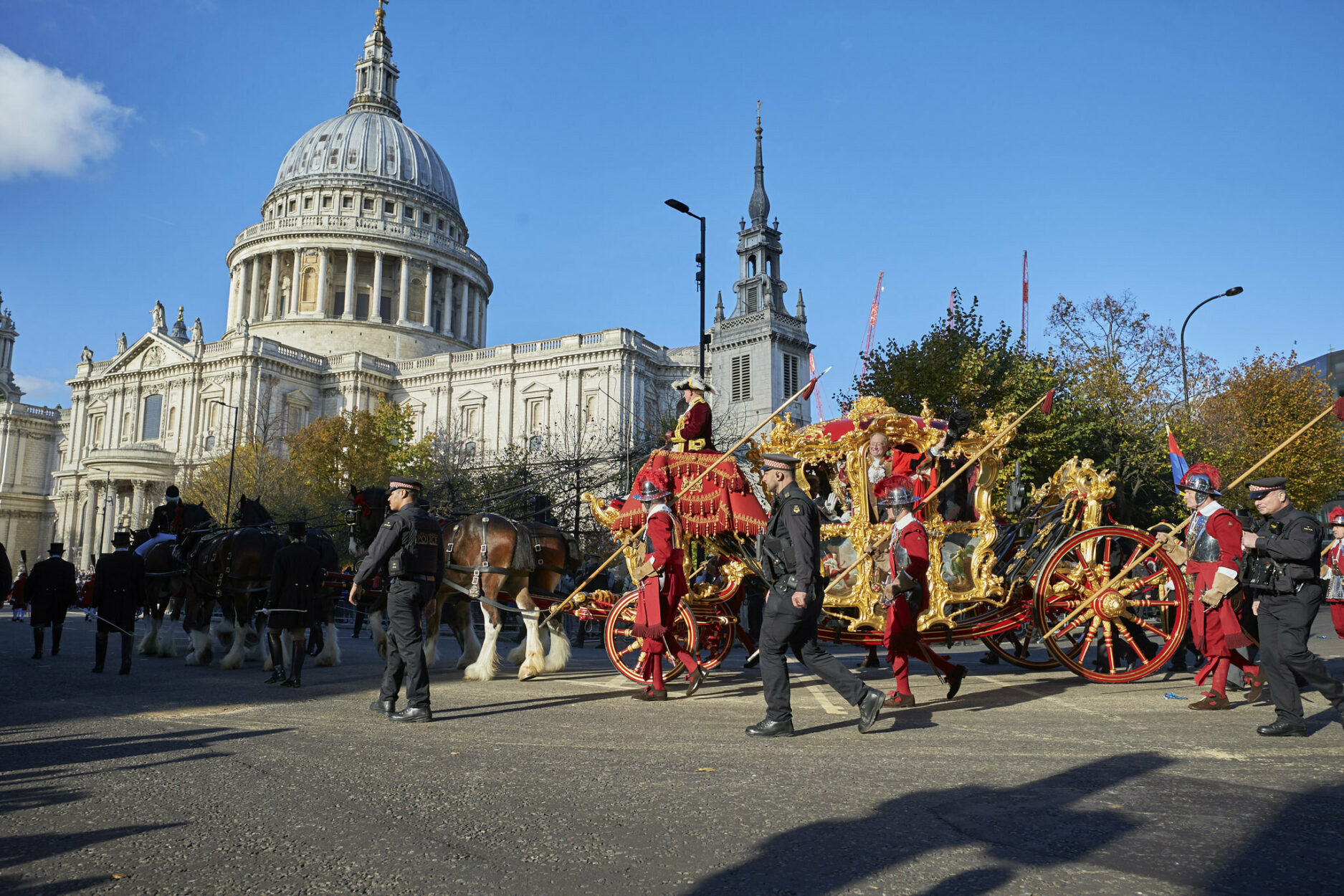
The Lord Mayor's Show 2023 (c) The City of London Corporation
Today
The event takes place on the second Saturday in November each year, with a fixed route, so you can choose your perfect spot before you arrive on the day. You can expect to catch thousands of participants in the parade, including those working across the City of London, as well as charities, the armed forces, livery companies and many, many more.
To find out more about this year's show, timings and things to do on the day, you can see the event page for the 2026 Lord Mayor's Show.